

A website may contain hundreds or thousands of pages, but search engines need a way to discover and understand those pages efficiently.
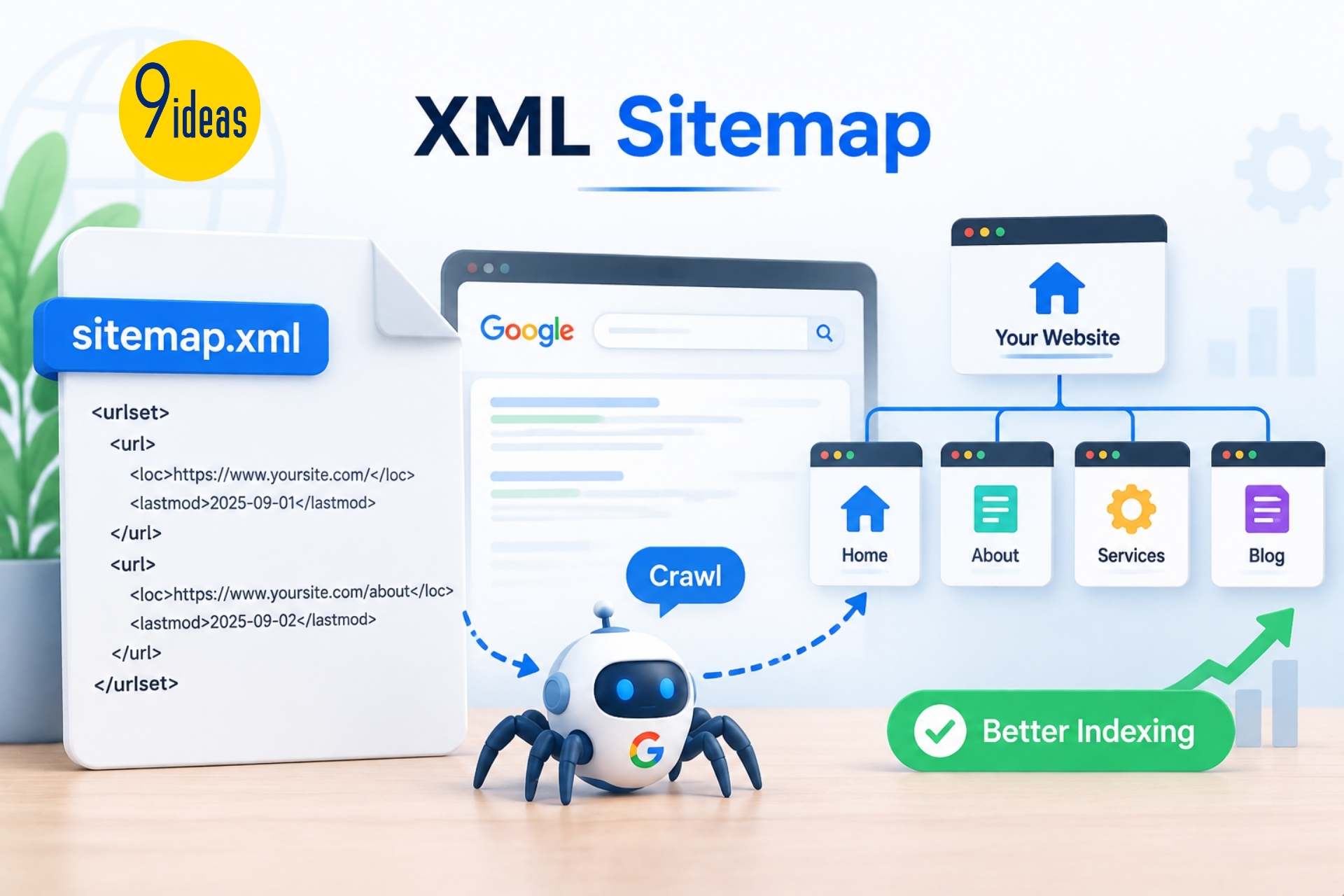
An XML Sitemap helps search engines identify important URLs on a website and understand the overall website structure.
It is an essential technical SEO element that supports better crawling and indexing.
What is an XML Sitemap?
An XML sitemap is a file that lists important pages of a website for search engines.
It provides information such as:
- Website URLs
- Page update dates
- Content relationships
- Website structure
The sitemap helps search engines discover pages that may not be easily found through internal links.
Why XML Sitemap is Important for SEO
Helps Search Engines Discover Pages
Search engines use crawlers to find website content.
An XML sitemap provides a roadmap that helps crawlers locate important pages.
Supports Website Indexing
A page must be indexed before it can appear in search results.
XML sitemaps help search engines understand which pages should be considered for indexing.
Useful for Large Websites
XML sitemaps are especially helpful for:
- E-commerce websites
- News websites
- Large business websites
- Websites with frequent updates
Types of XML Sitemaps
Standard Sitemap
Used for normal website pages.
Image Sitemap
Helps search engines discover important images.
Video Sitemap
Provides information about video content.
News Sitemap
Used by publishers to provide information about news articles.
XML Sitemap Best Practices
Include Important Pages Only
A sitemap should contain valuable pages that businesses want search engines to discover.
Avoid including:
- Duplicate pages
- Error pages
- Private pages
Keep Sitemap Updated
Whenever new content is added or removed, sitemap information should remain accurate.
Submit Sitemap to Google Search Console
Submitting an XML sitemap allows Google to discover website URLs more efficiently.
XML Sitemap and Technical SEO
XML sitemap works with other SEO elements:
XML Sitemap → Page Discovery
Robots.txt → Crawl Control
Internal Links → Website Navigation
Technical SEO → Website Health
Common XML Sitemap Mistakes
Businesses should avoid:
- Adding broken URLs
- Including duplicate pages
- Ignoring sitemap errors
- Adding blocked pages
- Not updating sitemap regularly
How to Check XML Sitemap
Website owners can check their sitemap through:
- Google Search Console
- SEO auditing tools
- Website CMS platforms
Monitoring sitemap status helps identify indexing issues.
Conclusion
An XML Sitemap is an important technical SEO tool that helps search engines discover and understand website pages.
By maintaining an accurate sitemap and following SEO best practices, businesses can improve website accessibility, support indexing and create a stronger technical foundation.
Frequently Asked Questions (FAQs)
1. What is an XML Sitemap?
An XML sitemap is a file that lists important website URLs to help search engines discover pages.
2. Does XML Sitemap improve rankings?
A sitemap does not directly improve rankings but helps search engines crawl and index website content.
3. Where can I submit an XML Sitemap?
Website owners can submit XML sitemaps through Google Search Console.
4. Is XML Sitemap required for every website?
While not mandatory, XML sitemaps are highly recommended, especially for large websites.
5. How often should XML Sitemap be updated?
It should be updated whenever important website content changes.