


Customers rarely move directly from discovering a brand to making a purchase. They may first become aware of a business, research available options, compare alternatives and eventually decide whether to take action.
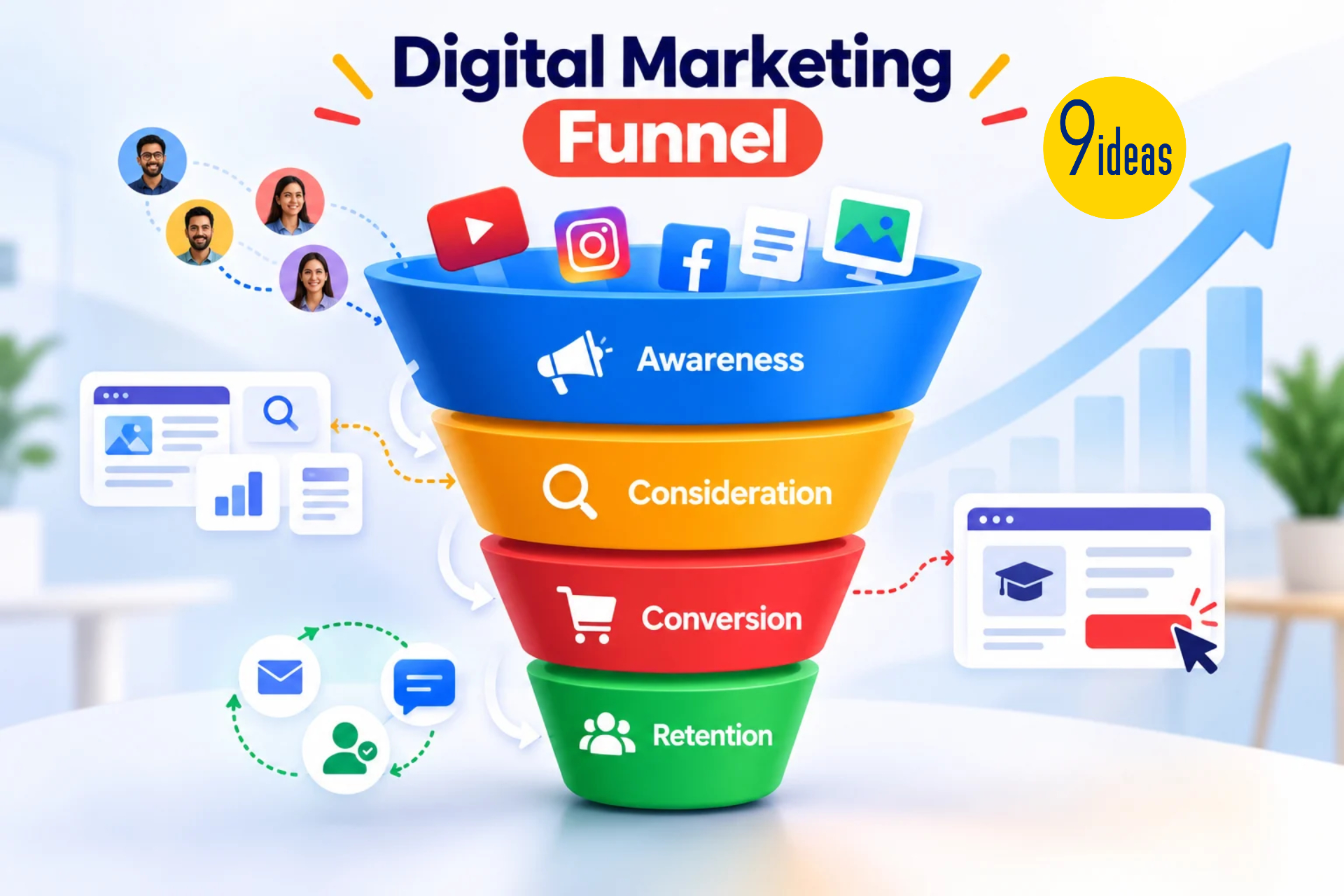
The Digital Marketing Funnel provides a framework for understanding these stages of the customer journey.
By creating appropriate marketing activities for each stage, businesses can communicate with potential customers according to their level of awareness and intent.
What is a Digital Marketing Funnel?
A digital marketing funnel represents the stages a potential customer may pass through before and after completing a desired action.
A simplified funnel can be represented as:
Awareness → Consideration → Conversion → Retention
Each stage requires a different marketing approach.
1. Awareness Stage
At the awareness stage, customers may not know much about a business or its offerings.
Marketing activities can include:
- Social media
- YouTube content
- Blog articles
- Display advertising
- Educational content
The primary objective is to introduce the brand or provide useful information.
2. Consideration Stage
At this stage, users are actively researching possible solutions.
Businesses can provide:
- Product comparisons
- Case studies
- Detailed guides
- Demonstrations
- Reviews
- Webinars
The goal is to help potential customers evaluate their options.
3. Conversion Stage
Users at this stage may be ready to take action.
Businesses can use:
- Landing pages
- Lead forms
- Product pages
- Consultation forms
- Purchase pages
- Targeted PPC campaigns
The focus is on making the desired action clear and convenient.
4. Retention Stage
The relationship does not necessarily end after conversion.
Businesses can use:
- Email communication
- Customer support
- Loyalty programs
- Personalized recommendations
- Educational content
The objective is to maintain customer relationships and encourage continued engagement.
Digital Marketing Funnel and Different Channels
Different channels can support different stages:
| Funnel Stage | Possible Marketing Channels |
|---|---|
| Awareness | Social Media, YouTube, Content Marketing |
| Consideration | SEO, Email, Guides, Reviews |
| Conversion | Google Ads, PPC, Landing Pages |
| Retention | Email, CRM, Customer Marketing |
A business does not necessarily need every channel at every stage.
Why the Marketing Funnel Matters
Understand Customer Behaviour
The funnel helps marketers understand where users are in their decision-making process.
Create Relevant Content
Different stages require different types of information.
Improve Lead Generation
Businesses can develop campaigns specifically designed to move potential customers toward conversion.
Measuring Funnel Performance
Businesses can track:
- Website traffic
- Engagement
- Leads
- Conversion rate
- Customer acquisition cost
- Customer retention
- Revenue
The most important metrics depend on the business model and campaign objectives.
Common Funnel Mistakes
Businesses should avoid:
- Treating every visitor as ready to buy
- Using the same message at every stage
- Ignoring retention
- Failing to track conversions
- Creating content without a clear customer objective
Conclusion
A Digital Marketing Funnel helps businesses understand the customer journey from initial awareness to conversion and retention.
By matching marketing channels, content and messaging to each stage, businesses can create a more structured digital marketing strategy and guide potential customers toward meaningful actions.
FAQs
1. What is a digital marketing funnel?
It is a framework that represents the different stages customers may move through from discovering a business to conversion and retention.
2. What are the main stages of a marketing funnel?
Awareness, consideration, conversion and retention are commonly used stages.
3. Which channels can support the awareness stage?
Social media, YouTube, content marketing and display advertising can support awareness campaigns.
4. Which channels can help generate conversions?
Google Ads, PPC campaigns, landing pages and conversion-focused website pages can support the conversion stage.
5. Why is retention included in the marketing funnel?
Retaining existing customers can support long-term customer relationships and continued business value.
