


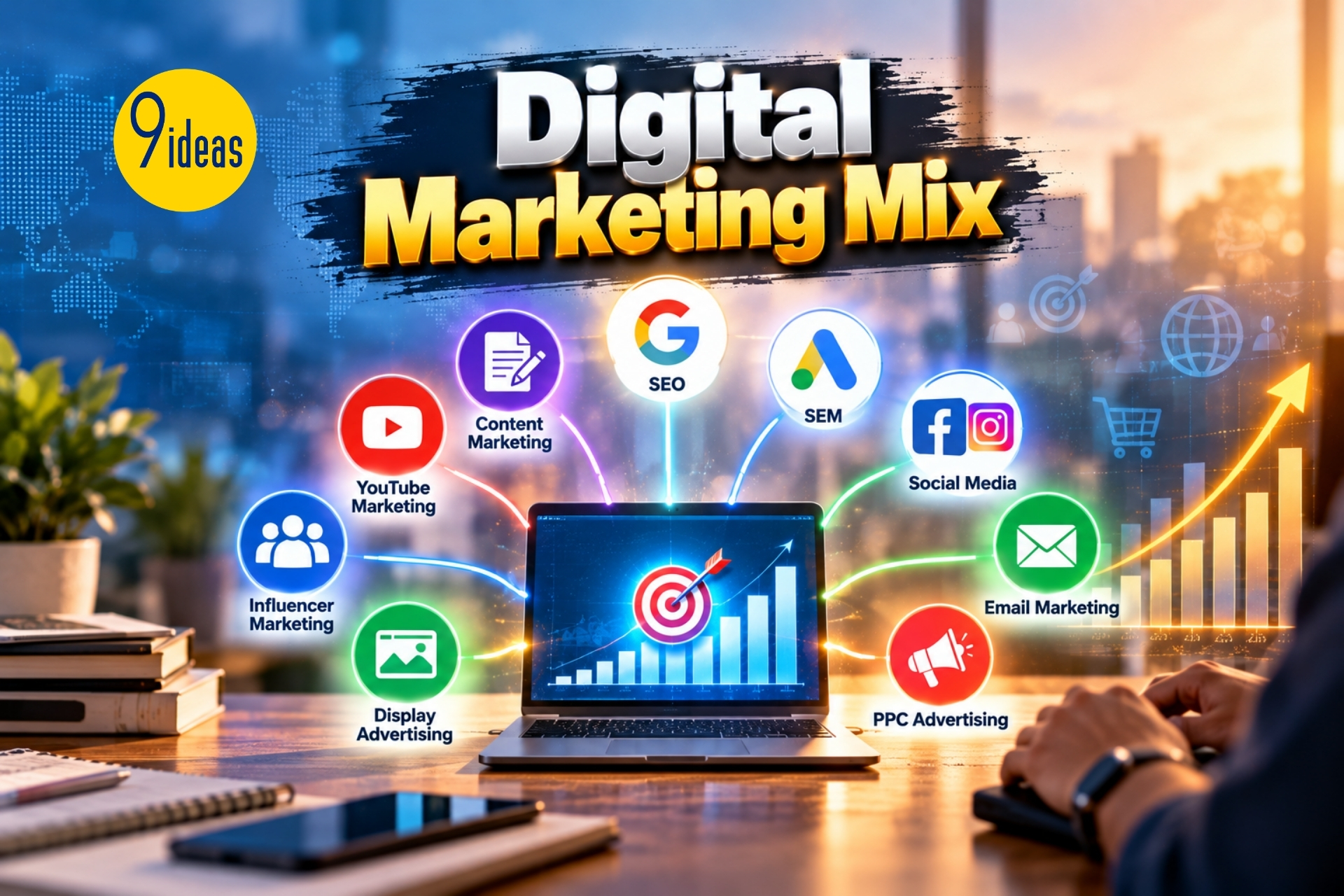
Businesses rarely depend on a single digital marketing channel to reach their customers. A customer might discover a brand through social media, search for additional information, visit the website and later receive an email before making a purchase. A Digital Marketing Mix brings different online marketing channels together to create a coordinated customer journey.
Instead of treating every channel independently, businesses can assign each channel a specific role within the broader marketing strategy.
What is a Digital Marketing Mix?
A digital marketing mix is the combination of different online marketing channels used to achieve business objectives.
It can include:
- SEO
- Search Engine Marketing
- Social media marketing
- Email marketing
- Content marketing
- PPC advertising
- YouTube marketing
- Influencer marketing
- Display advertising
The exact mix depends on the audience, industry and business objectives.
Why an Integrated Marketing Strategy Matters
Reaches Customers at Different Stages
Different channels can support different stages of the customer journey.
For example:
Social Media → Awareness
Content → Education
Search → Intent
Email → Nurturing
Paid Advertising → Acquisition
Creates Consistent Communication
Using consistent messaging across channels can make the customer experience more connected.
Diversifies Marketing Activities
Relying on only one channel can create risks if audience behaviour or platform performance changes.
Key Digital Marketing Channels
Search Marketing
SEO and SEM can help businesses reach people using search engines.
Social Media Marketing
Social platforms can help businesses build awareness, engagement and communities.
Email Marketing
Email can support customer communication, lead nurturing and retention.
Paid Advertising
PPC and other paid campaigns can provide targeted visibility and traffic.
Content Marketing
Useful content can educate audiences and support different stages of the customer journey.
YouTube Marketing
Video content can help businesses explain products, educate audiences and build engagement.
Creating a Digital Marketing Mix
A practical process can follow:
Define Goals → Understand Audience → Select Channels → Create Content → Launch Campaigns → Measure → Optimize
Businesses should choose channels based on their objectives rather than simply trying to use every available platform.
Coordinating Multiple Channels
An integrated campaign might look like:
Social Media Post → Website Visit → Email Signup → Email Nurturing → Paid Remarketing → Conversion
Each channel performs a different role while contributing to the overall customer journey.
Measuring the Digital Marketing Mix
Important metrics can include:
- Website traffic
- Engagement
- Leads
- Conversion rate
- Customer acquisition cost
- Revenue
- Return on advertising spend
Businesses should evaluate individual channels as well as their overall contribution to business objectives.
Common Digital Marketing Mistakes
Businesses should avoid:
- Using every channel without a clear strategy
- Sending inconsistent messages
- Ignoring customer journeys
- Measuring only vanity metrics
- Failing to track conversions
- Allocating budgets without performance analysis
Conclusion
A strong Digital Marketing Mix allows businesses to combine multiple online channels into a coordinated marketing strategy.
By understanding the role of each channel, maintaining consistent communication and measuring meaningful outcomes, businesses can create a more structured approach to customer acquisition and engagement.
FAQs
1. What is a digital marketing mix?
It is a combination of digital marketing channels used together to achieve business objectives.
2. Which channels are included in digital marketing?
SEO, SEM, social media, email, content marketing, PPC, YouTube and influencer marketing are common examples.
3. Why should businesses use multiple marketing channels?
Different channels can reach customers at different stages and provide complementary marketing functions.
4. How should businesses choose digital marketing channels?
Channels should be selected based on target audiences, business objectives, resources and measurable opportunities.
5. How can an integrated digital marketing strategy be measured?
Businesses can track traffic, engagement, leads, conversions, acquisition costs and revenue across relevant channels.
