


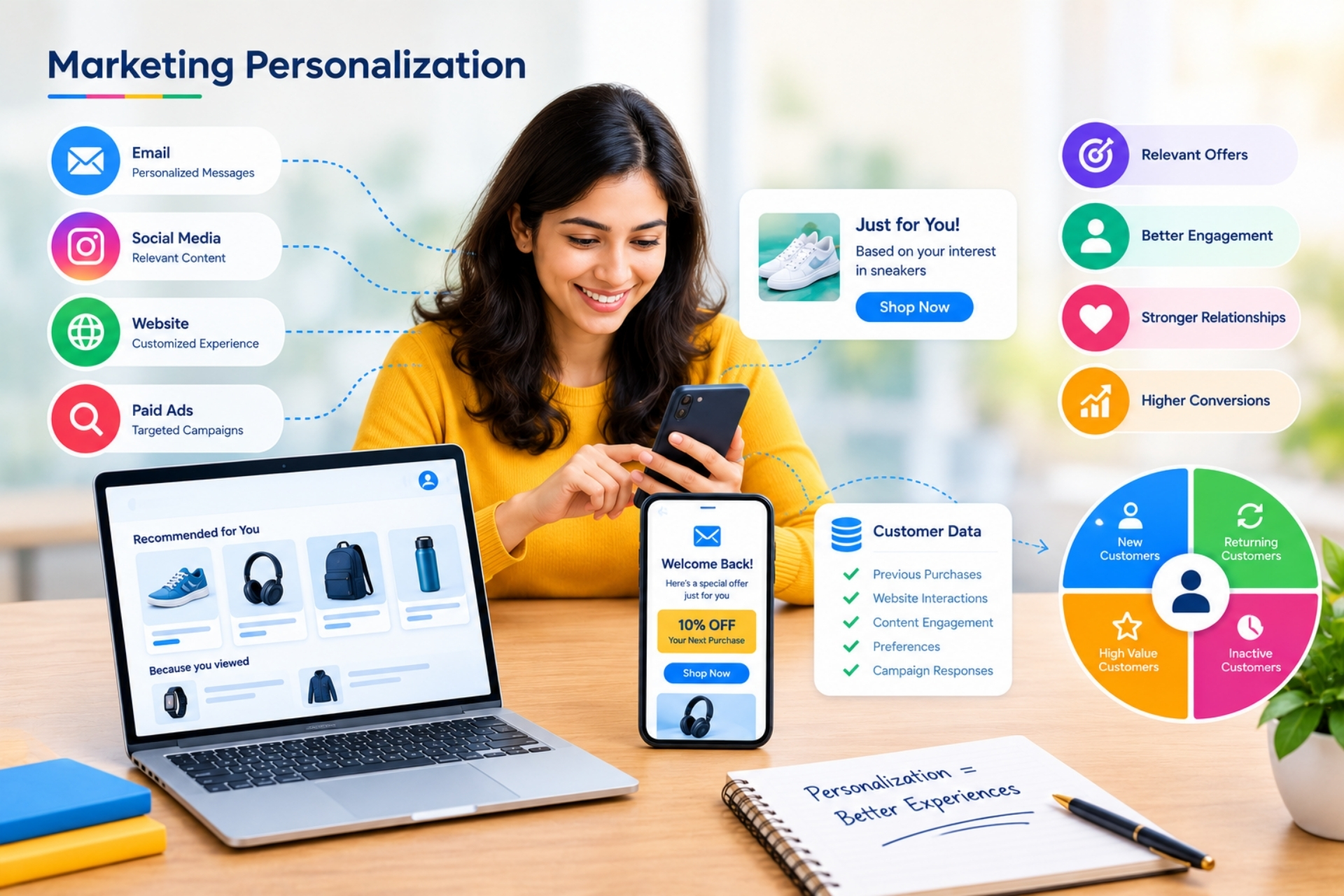
Customers interact with businesses through multiple digital channels. They may visit a website, subscribe to emails, engage with social media or purchase products. A generic marketing message may not be equally relevant to every customer. Marketing Personalization allows businesses to adapt communication based on available customer information, preferences and interactions.
When implemented responsibly, personalization can make digital experiences more relevant and useful.
What is Marketing Personalization?
Marketing personalization is the process of tailoring marketing communication or experiences to individual customers or defined audience groups.
Personalization can involve:
- Product recommendations
- Personalized emails
- Relevant offers
- Customized website experiences
- Audience-specific advertisements
- Content recommendations
Why Marketing Personalization Matters
Creates Relevant Communication
Customers are more likely to find communication useful when it reflects their interests or previous interactions.
Improves Customer Experience
Personalized experiences can reduce the amount of irrelevant information customers need to navigate.
Supports Customer Engagement
Relevant recommendations and communication can encourage customers to interact with a business.
Examples of Marketing Personalization
Personalized Email Marketing
Businesses can customize email communication based on customer interests, previous purchases or lifecycle stage.
For example:
New Subscriber → Welcome Communication
Previous Buyer → Related Product Recommendation
Inactive Customer → Re-Engagement Message
Product Recommendations
E-commerce businesses can recommend products based on previous interactions or purchasing behaviour.
Personalized Advertising
Advertising platforms can provide audience targeting options that allow businesses to reach relevant customer groups.
Website Personalization
Websites can present different content or recommendations to users based on available information and configured experiences.
Personalization and Customer Data
Personalization depends on data.
Relevant information may include:
- Previous purchases
- Website interactions
- Content engagement
- Customer preferences
- Campaign responses
Businesses should collect and use data responsibly and follow applicable privacy requirements.
Building a Personalization Strategy
A structured process can include:
Understand Audience → Collect Relevant Data → Create Segments → Personalize Experience → Measure Results
Businesses should start with useful and achievable personalization rather than attempting to customize every aspect of the customer journey.
Benefits of Marketing Personalization
Better Customer Engagement
Relevant content can encourage customers to interact with marketing communication.
More Relevant Offers
Businesses can provide offers that are better aligned with customer interests.
Improved Customer Relationships
Consistent and useful communication can support long-term customer relationships.
Common Personalization Mistakes
Businesses should avoid:
- Using inaccurate data
- Excessive personalization
- Making personalization feel intrusive
- Ignoring customer preferences
- Collecting unnecessary information
- Failing to provide privacy controls where required
Personalization should improve the customer experience rather than make customers uncomfortable.
Marketing Personalization and Digital Marketing
Personalization can connect multiple digital marketing channels:
Customer Data → Audience Segmentation → Personalized Content → Customer Engagement → Conversion
This makes personalization a useful component of a broader digital marketing strategy.
Conclusion
Marketing Personalization helps businesses create more relevant customer experiences by using appropriate information and audience insights.
By combining responsible data use, segmentation and relevant communication, businesses can develop marketing experiences that are more closely aligned with customer interests and needs.
FAQs
1. What is marketing personalization?
Marketing personalization involves tailoring marketing communication or experiences according to customer information, preferences or interactions.
2. What are examples of personalization?
Personalized emails, product recommendations, targeted offers and customized website experiences are common examples.
3. How does personalization improve customer experience?
It can reduce irrelevant communication and provide information or recommendations that are more relevant to individual customers.
4. Is customer data required for personalization?
Many forms of personalization use customer or behavioural data, which should be collected and handled responsibly.
5. Can personalization be used across digital marketing channels?
Yes. It can be used across email, websites, advertising, social media and other digital marketing channels where appropriate.
