


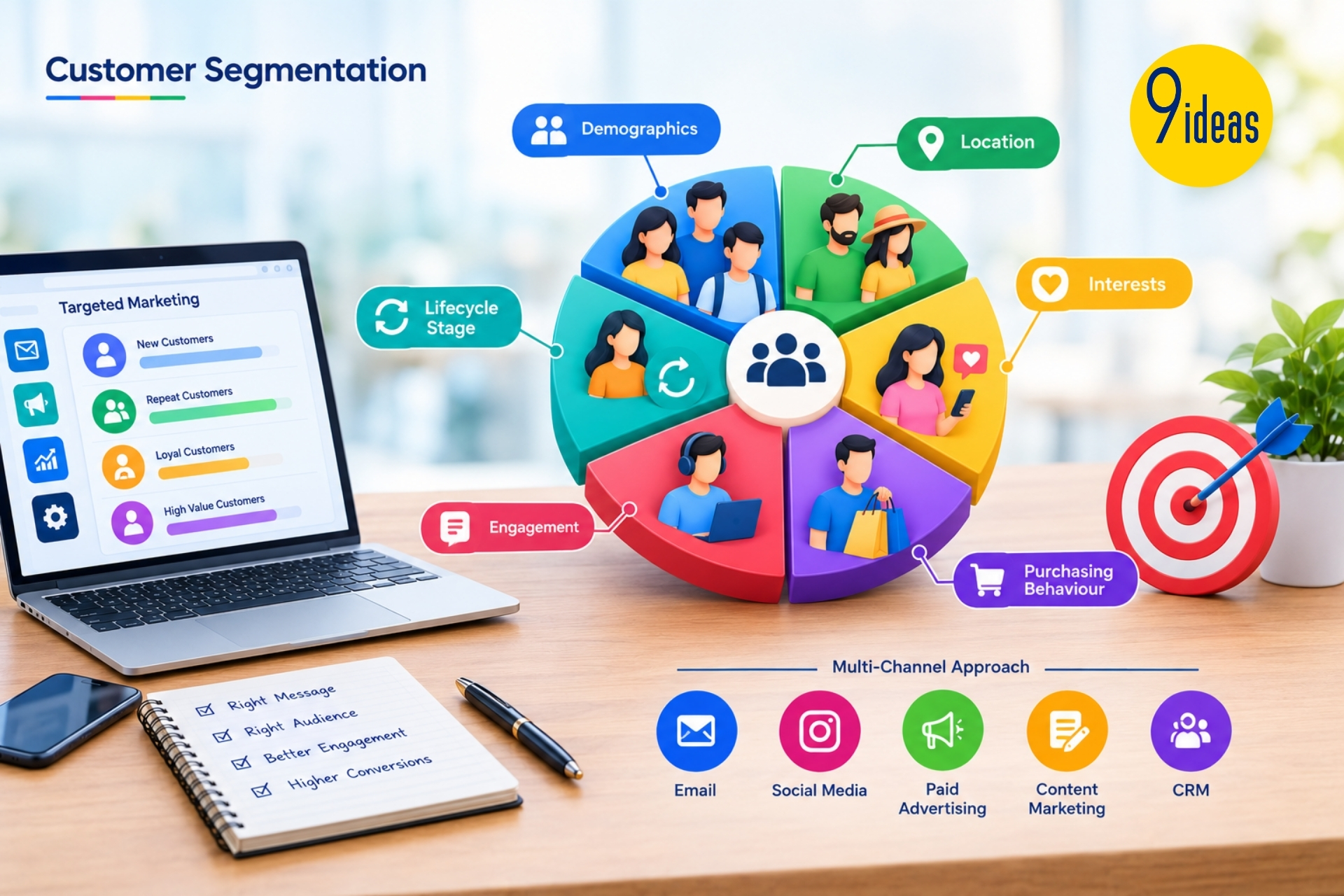
Not every customer has the same needs, interests or purchasing behaviour. Sending identical marketing messages to an entire audience can therefore make campaigns less relevant. Customer Segmentation helps businesses divide their audience into smaller groups based on shared characteristics, behaviours or needs.
By understanding these groups, marketers can create more relevant communication and develop targeted digital marketing campaigns.
What is Customer Segmentation?
Customer segmentation is the process of dividing a broad customer base into smaller groups with similar characteristics.
Businesses may segment customers based on:
- Demographics
- Location
- Interests
- Purchasing behaviour
- Engagement
- Customer lifecycle stage
- Previous interactions
The purpose is to better understand different audience groups and communicate with them appropriately.
Why Customer Segmentation Matters
Improves Marketing Relevance
Different customers may respond to different messages.
For example, a new customer may need introductory information, while an existing customer may be interested in loyalty offers or new products.
Supports Personalization
Segmentation allows businesses to adapt messages based on customer characteristics or behaviour.
Improves Campaign Planning
Marketers can create campaigns specifically designed for particular audience groups instead of relying on a single broad message.
Types of Customer Segmentation
Demographic Segmentation
Customers can be grouped according to characteristics such as age, occupation or income where appropriate and lawfully used.
Geographic Segmentation
Audiences can be divided based on geographic areas.
This can be useful for businesses operating in different markets.
Behavioural Segmentation
Customers can be grouped based on actions such as:
- Purchases
- Website interactions
- Content engagement
- Product views
- Previous campaign responses
Lifecycle Segmentation
Customers can be categorized according to their relationship with a business.
For example:
New Visitor → Lead → New Customer → Repeat Customer → Loyal Customer
Customer Segmentation Process
A practical approach can follow:
Collect Relevant Data → Identify Patterns → Create Segments → Develop Messages → Launch Campaign → Measure Results
Segments should have a clear purpose and should be based on meaningful differences between audience groups.
Segmentation Across Digital Marketing Channels
Customer segments can support different marketing channels:
Email → Personalized Communication
Social Media → Targeted Campaigns
Paid Advertising → Audience Targeting
Content Marketing → Relevant Information
CRM → Customer Management
Common Segmentation Mistakes
Businesses should avoid:
- Creating too many unnecessary segments
- Using inaccurate customer data
- Making assumptions about customers
- Sending irrelevant personalized messages
- Ignoring privacy requirements
- Failing to review segments over time
Conclusion
Customer Segmentation helps businesses understand differences within their audience and create more relevant marketing campaigns.
By using meaningful customer data, developing appropriate audience groups and measuring campaign performance, businesses can build a more targeted and customer-focused digital marketing strategy.
FAQs
1. What is customer segmentation?
Customer segmentation is the process of dividing customers into groups based on shared characteristics, behaviours or needs.
2. Why is customer segmentation important?
It helps businesses create more relevant marketing messages and campaigns for different audience groups.
3. What are common types of customer segmentation?
Demographic, geographic, behavioural and lifecycle segmentation are commonly used approaches.
4. How does segmentation support personalization?
It allows businesses to adapt marketing communication according to the characteristics or behaviour of different customer groups.
5. Can customer segmentation be used in digital advertising?
Yes. Audience segments can support targeting and campaign planning across eligible digital advertising platforms.
